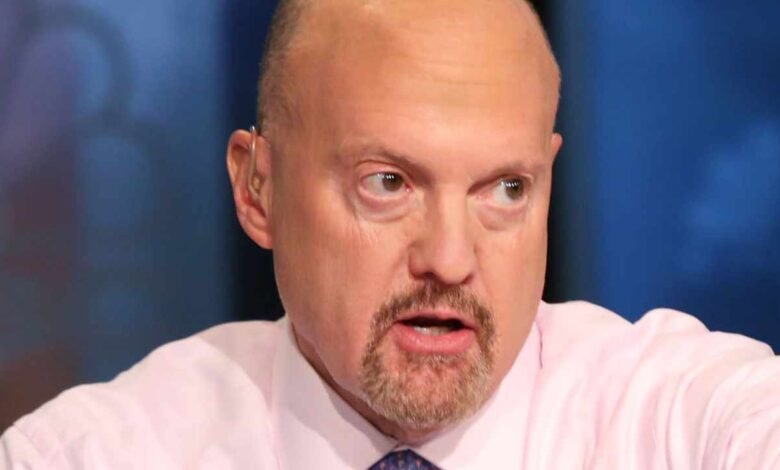
Jim Cramer Calls the Market ‘Miserable’ as Oil, Tariffs, and Fed Hawkishness Rattle Wall Street

📰 Exclusive Crypto News & Analysis: Stay ahead with the latest developments in the cryptocurrency and blockchain space.
📈 Market Update: Real-time price movements, technical analysis, and trading signals.
Key Takeaways
- Jim Cramer called the market “miserable” on July 21 amid oil, tariff and Fed pressure.
- WTI crude jumped 9.4% to $78.14 a barrel after Trump reimposed a Strait of Hormuz blockade.
- The Fed holds rates at 3.50%-3.75%, with half of officials open to a hike this year.
Not the First Time He’s Reached for That Word
Cramer’s comment is not an isolated outburst given that he used nearly identical language in March, telling viewers of his show ‘Mad Money’ that it had been “another miserable week” for the market, explaining:
“Four weeks since the war started and it’s been pretty darn awful.”
The outburst came amidst the ongoing (and seemingly never-ending) Iran conflict, which first pushed oil prices higher and dragged tech stocks down with it. Four months later, the same underlying conflict is still the dominant force behind his description of the market as miserable again.
The recurrence says as much about the unresolved conflict as it does about Cramer himself. His warning in March that “the history of oil shocks is littered with bear markets” has proven durable advice through a summer defined by repeated flare-ups in the Middle East, each one rattling markets in a similar pattern of oil spikes followed by equity selloffs.
The Oil Shock Behind the Mood
The immediate trigger for July’s volatility traces to President Trump’s decision to reimpose a naval blockade on Iran through the Strait of Hormuz, a waterway that carries roughly a fifth of the world’s oil transport. West Texas Intermediate (WTI) crude jumped 9.4% to settle at $78.14 a barrel on the news, one of the sharpest single-day moves for the commodity so far this year.
Trump initially demanded a 20% fee on all cargo shipped through the strait under U.S. protection before later abandoning that demand in favor of alternative investment commitments from Gulf states.
That kind of policy whiplash has become a recurring feature of this year’s markets, with oil prices lurching higher on each new blockade threat and partially retracing whenever tensions ease. Cramer has separately flagged tariff-related price increases as compounding the pain for lower-income consumers already dealing with persistent inflation.
A More Hawkish Fed Adds to the Pressure
Monetary policy has offered little relief given that the Federal Reserve has held its target rate at 3.50% to 3.75%and new Fed Chair Kevin Warsh has moved the central bank away from the forward guidance investors had relied on, shifting instead toward a purely data-dependent approach.
Roughly half of Fed officials now say at least one quarter-point rate increase could be necessary before the end of 2026, a notable reversal from the rate-cutting expectations that dominated market discussion earlier in the cycle.
Cramer flagged the shift just a day earlier, telling viewers it was time to look beyond tech stocks as artificial intelligence-related uncertainty adds another layer of risk on top of the oil and rate picture. He has also pointed to elevated rates as a specific drag on individual names, describing Home Depot as a great “house” trapped in an awful “neighborhood” of high borrowing costs that keep pressuring rate-sensitive sectors like housing and retail.
Bitcoin Caught in the Same Current
Cramer’s crypto commentary has swung sharply over the years, from calling bitcoin “a winner” worth owning over Strategy’s stock to later turning fully bearish and questioning where the asset’s bulls had gone as it struggled below $80,000. His market-wide “miserable” framing this time was not specifically about bitcoin, but the asset has traded in the same risk-off environment, changing hands near $65,000 on July 20 in what analysts have broadly described as a mixed and directionless stretch for crypto prices.
The near-term path for sentiment likely hinges on whether the Hormuz standoff de-escalates or produces another spike in oil prices, and on how the Fed’s newly data-dependent messaging is interpreted at its next policy meeting. Trump has already reversed course once on the strait fee within the same week, a reminder that the geopolitical piece of this equation can shift again with little warning.
💡 Pro Tip: Bookmark our site for daily insights, market predictions, and expert trading strategies.
🔗 Explore More: Check our sections for in-depth guides, exchange reviews, and blockchain technology deep-dives.