Hollywood’s Silent Takeover AI Actors Ready for Their Close-Up by 2026
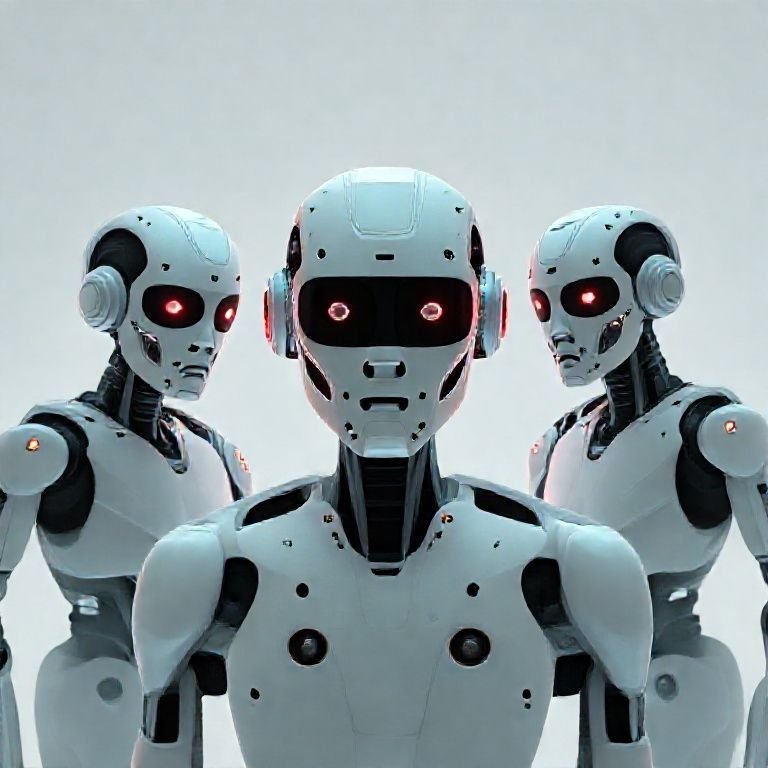
AI actors are revolutionizing Hollywood by 2026. Explore the technology, ethical dilemmas, and future impact of synthetic stars on filmmaking.
The Dawn of Digital Performers: What Are AI Actors?
The spotlight in Hollywood has always been reserved for human stars, but a silent revolution is underway, poised to dramatically reshape the entertainment landscape. Imagine a world where performers never age, never tire, and can be instantly available for any role, anywhere. This isn’t science fiction anymore; it’s the imminent reality driven by the rise of AI actors.
These sophisticated digital creations are more than just CGI models. They are highly advanced synthetic entities, capable of expressing a wide range of emotions, delivering dialogue, and performing complex actions with startling realism. The buzz is growing, and by 2026, many predict these AI actors will be taking their close-up, becoming integral to film and television production.
Defining Synthetic Talent
At its core, a synthetic performer, or AI actor, is a digital character brought to life through artificial intelligence and advanced computer graphics. Unlike traditional animated characters, AI actors are designed to emulate human performance with an unprecedented degree of fidelity.
They can be generated entirely from scratch, based on scanned real actors, or even resurrected versions of deceased legends. The goal is to create believable, emotionally resonant characters that can seamlessly integrate into any narrative, offering filmmakers unparalleled flexibility and creative control.
The Technology Behind the Magic
Bringing AI actors to the screen involves a symphony of cutting-edge technologies. These digital performers are built upon foundations of machine learning, sophisticated rendering engines, and meticulous motion capture data.
– **Deepfake Technology:** While often associated with controversy, deepfake algorithms are crucial for generating hyper-realistic facial expressions and voice synthesis. These systems learn from vast datasets of human faces and voices to create convincing digital likenesses and performances.
– **Generative Adversarial Networks (GANs):** GANs play a pivotal role in crafting entirely new faces, bodies, and even distinct personality traits for AI actors. One part of the network generates images, while another discriminates between real and fake, constantly refining the AI actor’s appearance and behavior until it’s indistinguishable from human.
– **Advanced CGI and Rendering:** The photorealism of modern cinema relies heavily on sophisticated computer-generated imagery. AI actors leverage these same tools, combined with ray tracing and physically based rendering, to ensure every pore, hair, and wrinkle looks authentic on screen.
– **Motion Capture (MoCap) and Performance Capture:** Although AI actors can be trained to move autonomously, human performance capture remains vital for grounding their movements in reality. Real actors’ performances are often recorded and then used to train AI models, or directly transferred to the digital characters, ensuring naturalistic motion and subtle nuances.
Hollywood’s New Casting Call: The Allure of AI Actors
The entertainment industry is always seeking innovation, and AI actors present a compelling package of benefits. From budgetary advantages to unlocking new creative avenues, their appeal is multifaceted and growing rapidly.
Filmmakers and studios are increasingly exploring these digital performers not just as a novelty, but as a practical solution to many production challenges. The potential cost savings and expanded creative possibilities are too significant to ignore, accelerating the timeline for their mainstream adoption.
Cost Efficiency and Scalability
One of the most immediate attractions of AI actors is the prospect of reducing production costs. Traditional filmmaking is incredibly expensive, with a significant portion allocated to talent fees, travel, lodging, and on-set demands.
– **Reduced Talent Costs:** While creating a highly realistic AI actor initially requires investment, subsequent usage can be significantly cheaper than hiring a top-tier human actor for multiple projects or extended periods. There are no residuals or union negotiations, simplifying the financial model.
– **Streamlined Production Logistics:** AI actors eliminate the need for physical sets in many instances, reduce travel expenses, and are immune to location challenges or weather delays. They can perform 24/7 without needing breaks, catering, or dressing rooms, leading to faster production cycles.
– **Global Accessibility:** For productions with limited budgets, AI actors can provide access to high-caliber “performers” without the logistical nightmare of international travel or work permits. This democratizes access to talent, potentially fostering diverse global storytelling.
Creative Freedom and Artistic Innovation
Beyond economics, AI actors unlock unprecedented levels of creative freedom for directors and writers. They can bring to life characters and scenarios that would be impossible or prohibitively dangerous with human performers.
– **Resurrecting Legends:** The ability to “cast” deceased actors in new roles, with their families’ permission and careful ethical considerations, offers a poignant way to revisit beloved stars. Imagine seeing Marilyn Monroe or James Dean in a modern film, delivering a never-before-seen performance.
– **Impossible Stunts and Transformations:** AI actors can perform any stunt, endure any environmental extreme, or undergo radical physical transformations without risk. This pushes the boundaries of action sequences, fantastical creatures, and historical accuracy, allowing stories to unfold without physical limitations.
– **Customizable Performances:** Directors could potentially tweak an AI actor’s performance down to the minutest detail – a subtle facial twitch, a specific tone of voice, or a precise gesture – ensuring every scene perfectly matches their vision without multiple takes or actor fatigue.
Ethical and Practical Considerations for AI Actors
The emergence of AI actors is not without its complexities. There are significant ethical, legal, and practical hurdles that the industry must address as these technologies mature and become more widespread.
– **Intellectual Property and Likeness Rights:** Who owns the likeness of an AI actor based on a human? What about the “performance” generated by AI? Establishing clear legal frameworks for digital ownership, copyrights, and posthumous rights is paramount.
– **Union Concerns and Workforce Impact:** Actor unions, like SAG-AFTRA, are already grappling with the implications of AI on human employment. The fear of widespread job displacement for background actors, stunt performers, and even leading roles is a major concern. Fair compensation, consent for digital replicas, and job protection will be crucial negotiation points.
– **The Uncanny Valley:** While AI actors are becoming incredibly realistic, they still sometimes fall into the “uncanny valley,” a phenomenon where something looks almost human but feels unsettlingly artificial. Overcoming this subtle psychological barrier is key to audience acceptance.
– **Data Privacy and Consent:** If AI actors are trained on vast datasets of human performances, images, and voices, ensuring the data is ethically sourced and used with explicit consent is vital. Privacy concerns for living individuals whose data might be inadvertently or explicitly used for training are paramount.
Platforms and Technologies Powering the Next Generation of Stars
The tools enabling the creation and deployment of AI actors are rapidly evolving. Several companies are investing heavily in platforms that simplify the process of generating realistic digital characters and animating them with AI-driven intelligence.
These platforms often combine elements of 3D modeling, animation software, and AI deep learning models, making the complex task of creating synthetic talent more accessible. As technology progresses, we can expect these platforms to become even more intuitive and powerful, driving the adoption of AI actors in various media.
Key AI Actor Development Tools
The development of AI actors relies on a suite of integrated tools, each specializing in a different aspect of digital creation and animation. From sculpting digital bodies to imbuing them with AI-driven performances, these technologies are pushing the boundaries of what’s possible.
– **3D Digital Sculpting Software:** Tools like ZBrush and Blender allow artists to sculpt highly detailed digital models, forming the foundational anatomy of an AI actor. These models are then textured and rigged for animation.
– **Real-time Rendering Engines:** Game engines such as Unreal Engine and Unity are increasingly used in film production for their ability to render complex scenes and characters in real time. This speeds up iteration and allows for quick previews of AI actor performances.
– **AI Performance Generation Suites:** Dedicated software that uses machine learning to generate realistic facial expressions, body language, and voice synchronization based on scripts or general prompts. These tools are the true core of AI actors, moving beyond simple animation to intelligent performance generation.
– **Cloud-Based AI Processing:** The computational power required for training complex AI models and rendering high-fidelity AI actors is immense. Cloud computing services provide scalable resources, allowing studios to develop and deploy these digital performers efficiently.
Comparison of Leading AI Character Creation Platforms
| Product | Price | Pros | Cons | Best For |
|---|---|---|---|---|
| SyntheFX Studio Pro | Subscription ($500/month) | High-fidelity character generation, vast emotion library, seamless voice sync. | Steep learning curve, requires powerful hardware for local rendering. | Professional film studios needing photorealistic AI actors for lead roles. |
| PersonaCraft AI | Tiered ($99-$399/month) | User-friendly interface, quick character customization, good for dialogue. | Lacks extreme physical realism for close-ups, fewer advanced animation options. | Indie filmmakers, educational content, virtual presenters, background AI actors. |
| ReGen FX Suite | Per-project license (variable) | Specializes in digital human “resurrection” and de-aging, excellent likeness preservation. | Ethical and legal complexities, high cost for bespoke character generation. | Historical dramas, brand endorsements using deceased celebrities, special effects teams. |
The Road Ahead: Challenges and Opportunities for AI Actors by 2026 and Beyond
The trajectory for AI actors is steep, with significant advancements expected in the coming years. By 2026, we can anticipate seeing these digital performers integrated into more mainstream productions, moving beyond niche applications to become commonplace.
However, this journey is not without its hurdles. The industry must navigate technological limitations, societal acceptance, and the complex ethical landscape that accompanies such a profound shift in creative practices.
Navigating the Uncanny Valley
Despite rapid progress, achieving perfect photorealism that genuinely fools the human eye remains a challenge. The uncanny valley effect, where an AI actor is almost human but feels subtly “off,” can break immersion and deter audiences.
Continuous research in AI perception, advanced rendering techniques, and behavioral algorithms is crucial. The goal is to not just look human, but to *feel* human in their nuances, reactions, and emotional depth, crossing the chasm of the uncanny valley to truly resonate with viewers.
The Workforce Impact: Collaboration or Replacement?
One of the most pressing concerns is the impact of AI actors on the human workforce. While some argue that AI will create new jobs in digital artistry, AI training, and ethical oversight, others fear it will lead to significant job losses for actors, extras, and even behind-the-scenes crew.
A balanced future likely involves collaboration. AI actors could handle background roles, difficult stunts, or specific digital doubles, allowing human actors to focus on complex, emotionally driven performances that still require the unique spark of human creativity and improvisation. Dialogue and robust agreements between unions and studios will be vital.
The Legal and Ethical Framework
As AI actors become more sophisticated, the need for clear legal and ethical guidelines becomes urgent. Questions surrounding intellectual property, the rights of digital likenesses, and the ethical use of AI-generated content need definitive answers.
Policymakers, legal experts, and industry leaders must work together to establish regulations that protect human artists, ensure fair use of technology, and prevent misuse. This includes defining ownership of AI-generated performances, setting standards for consent for digital replicas, and addressing potential issues like deepfake misuse and identity theft.
Redefining Storytelling: How AI Actors are Shaping the Future of Entertainment
Beyond the technical and ethical considerations, AI actors offer a profound opportunity to redefine how stories are told and experienced. Their versatility and limitless potential can lead to entirely new forms of narrative and interactive content.
This goes beyond just film and television; the influence of AI actors could extend into gaming, virtual reality, education, and personalized media experiences. Their impact on how we consume and engage with stories is poised to be transformative.
Interactive Experiences and Personalized Content
Imagine a movie where the plot adapts based on your choices, or a virtual reality experience where AI actors improvise dialogue tailored to your interactions. AI actors can be at the forefront of personalized and interactive entertainment, creating bespoke narratives for individual viewers.
This could revolutionize gaming, educational content, and even brand storytelling. By responding dynamically to user input, AI actors can make digital experiences feel more alive, engaging, and deeply personal, blurring the lines between passive viewing and active participation.
Global Reach and Accessibility
AI actors can speak any language flawlessly, with perfectly lip-synced dialogue and culturally appropriate expressions. This capability dramatically lowers barriers to international distribution, allowing stories to reach global audiences without the need for dubbing human actors or subtitle complexities.
Furthermore, AI actors can be designed with diverse appearances and characteristics that might be challenging to cast with human talent, ensuring broader representation in media. This accessibility can foster a more inclusive and globally connected entertainment ecosystem.
The emergence of AI actors marks a pivotal moment in the history of Hollywood, hinting at a future where the lines between human and synthetic performance blur. By 2026, these digital performers are set to step out of the shadows and onto the big screen, offering unprecedented creative freedom, cost efficiencies, and entirely new storytelling possibilities. While ethical concerns and workforce impacts necessitate careful navigation, the industry’s embrace of AI actors is inevitable, promising a vibrant, if complex, evolution of entertainment. The stage is set for a silent takeover, and the curtain is about to rise on the next generation of stars.
Frequently Asked Questions About AI Actors
What is an AI actor?
An AI actor is a digital character created and animated using artificial intelligence and computer graphics. These synthetic performers are designed to deliver realistic, emotionally nuanced performances that can be integrated into films, TV shows, games, and other media.
Will AI actors replace human actors?
The consensus is that AI actors are more likely to complement rather than fully replace human actors. While they offer benefits in terms of cost, scalability, and performing dangerous stunts, the unique human touch, improvisation, and emotional depth of live actors are still considered irreplaceable for many roles. Collaboration is the most probable future.
What are the legal implications of using AI actors?
The legal landscape for AI actors is still developing. Key concerns include intellectual property rights for digital likenesses, consent for using human data to train AI, and compensation or residuals for original actors whose performances might be used to inform AI models. Clear regulations are needed to protect both creators and performers.
How realistic are AI actors?
AI actors are becoming incredibly realistic, often indistinguishable from human actors in many contexts, especially for background roles or specific effects shots. However, they sometimes encounter the “uncanny valley” effect, where they appear almost human but subtly artificial. Ongoing research aims to overcome this for truly convincing close-ups and nuanced performances.
When can we expect to see more AI actors in films?
We are already seeing AI-generated elements in films today, from de-aging technology to digital doubles. Experts predict that by 2026, AI actors will become more commonplace, appearing in a wider range of roles in mainstream film and television productions, especially where cost-efficiency or creative challenges are factors.
References and Further Reading
- The Hollywood Reporter: AI and Actors: The Full Scope of What the SAG-AFTRA Strike Has Addressed
- OpenAI Blog: Tackling the Challenges of Deepfakes
- Wired: Hollywood Is Racing to Turn Actors Into AI Deepfakes
- SIGGRAPH: Advances in Digital Humans and AI for Entertainment
Share this content:


Post Comment